Follow us:

Author name: hobolegal

What Is a 35 Notice from Cyber Cell?

What Is a 35 Notice from Cyber Cell?

In recent cyber crime investigations, many people receive a “35 Notice” from Cyber Cell and become worried without understanding its meaning. This blog explains what a Section 35 notice is, why it is issued, and what you should do legally after receiving one. What Is a 35 Notice from Cyber Cell? A 35 Notice generally refers to a notice issued by the Cyber Crime Police under Section 35 of the Bharatiya Nagarik Suraksha Sanhita (BNSS), 2023 (earlier related procedural powers under criminal law). This notice is sent when police require: Information Documents Clarification of transactions Presence for inquiry or investigation It does not automatically mean you are guilty or accused of a crime. Why Does Cyber Cell Send a 35 Notice? Cyber Cell may issue this notice when your: Bank account appears in a fraud money trail Transaction is linked to an online complaint Account received suspicious funds UPI or P2P transfer is under investigation Phone number or IP address is connected to a case Many genuine individuals receive notices because cyber investigations follow the transaction chain, not only suspects. Common Situations Where People Receive 35 Notice Selling or buying cryptocurrency through P2P platforms Online business payments from unknown customers Receiving third-party transfers Freelancing or digital service payments Account used unknowingly by another person What Information Is Asked in a 35 Notice? Usually, the notice may request: Identity proof (Aadhaar, PAN) Bank account statement Transaction explanation Source of funds Appearance before Investigating Officer Always read the notice carefully for deadlines. Is a 35 Notice an FIR? No. A Section 35 notice is not an FIR and not an arrest warrant. It is mainly an inquiry notice issued during investigation. However, ignoring it may create legal complications. What To Do After Receiving a 35 Notice 1. Verify Authenticity Confirm the notice through: Official police email Police station contact number 2. Prepare Documents Keep ready: Bank statements Transaction screenshots Agreements or invoices Communication records 3. Submit Written Reply Provide a clear explanation of transactions with supporting proof. 4. Cooperate With Investigation Attend inquiry if required and respond professionally. 5. Take Legal Guidance If your bank account is frozen or you are unsure how to respond, consult a cyber law professional. Can Bank Account Be Frozen After 35 Notice? Yes, in some cases cyber police may request banks to place: Debit freeze Lien mark Temporary hold This is done to secure disputed funds during investigation. How Long Does Investigation Take? There is no fixed timeline, but generally: Initial verification: few weeks Transaction review: 30–90 days (may vary case to case) Regular follow-up and proper documentation help faster resolution. Mistakes to Avoid Ignoring the notice Giving false information Sharing incomplete documents Communicating aggressively with officers Deleting transaction records 35 नोटिस क्या होता है? 35 नोटिस साइबर पुलिस द्वारा जांच के दौरान जारी किया जाने वाला एक कानूनी नोटिस है, जो सामान्यतः Bharatiya Nagarik Suraksha Sanhita (BNSS), 2023 की धारा 35 के तहत सूचना या स्पष्टीकरण लेने के लिए भेजा जाता है। इसका मतलब यह नहीं है कि आप अपराधी हैं। यह केवल जांच (Inquiry) का हिस्सा होता है। साइबर सेल 35 नोटिस क्यों भेजती है? जब किसी साइबर फ्रॉड की जांच चल रही होती है और: आपका बैंक अकाउंट पैसे की चेन में आता है संदिग्ध ट्रांजैक्शन दिखता है किसी शिकायत में आपका नंबर या अकाउंट जुड़ता है UPI या Online Payment की जांच होती है तब साइबर सेल जानकारी लेने के लिए नोटिस भेजती है। किन लोगों को अक्सर 35 नोटिस मिलता है? Crypto P2P ट्रांजैक्शन करने वाले Online business payment लेने वाले Freelancers Third-party payment receive करने वाले जिनके अकाउंट में unknowingly पैसा आया हो 35 नोटिस में क्या मांगा जाता है? आमतौर पर: Aadhaar / PAN Copy Bank Statement Transaction explanation Source of funds Investigating Officer के सामने उपस्थित होने का निर्देश क्या 35 नोटिस FIR होता है? नहीं। यह FIR या गिरफ्तारी वारंट नहीं होता।यह केवल जांच के लिए सूचना देने का नोटिस है। लेकिन इसे ignore करना सही नहीं है। 35 नोटिस मिलने पर क्या करें? 1. नोटिस verify करें Official police contact से confirm करें। 2. दस्तावेज तैयार करें Bank statement Transaction proof Screenshot Invoice या agreement 3. लिखित जवाब दें साफ और सही explanation लिखकर जमा करें। 4. जांच में सहयोग करें जरूरत हो तो Cyber Cell में उपस्थित हों। 5. कानूनी सलाह लें अगर अकाउंट freeze या lien हुआ है तो cyber lawyer से मार्गदर्शन लें। क्या 35 नोटिस के बाद बैंक अकाउंट freeze हो सकता है? हाँ, जांच के दौरान Cyber Cell बैंक को निर्देश देकर: Debit Freeze Lien Mark Temporary Hold लगवा सकती है। जांच में कितना समय लगता है? हर केस अलग होता है, लेकिन सामान्यतः: Initial verification: कुछ सप्ताह Investigation review: 30–90 दिन (case पर depend) क्या गलती नहीं करनी चाहिए? नोटिस ignore न करें गलत जानकारी न दें अधूरे दस्तावेज जमा न करें ट्रांजैक्शन रिकॉर्ड delete न करें A 35 Notice from Cyber Cell is mainly an investigative step, not a punishment. Most recipients are witnesses or transaction holders whose accounts appeared in a money trail. Proper response, documentation, and legal understanding can resolve the matter smoothly. Disclaimer: This article is for informational and awareness purposes only. It does not constitute legal advice or create a lawyer-client relationship.

est Property Dispute Lawyer in Gautam Buddh Nagar

Property Dispute Lawyer in Gautam Buddh Nagar

Property disputes are one of the most common legal issues in India. In fast-growing regions like Gautam Budh Nagar, disputes related to land, flats, builder projects, family property, and illegal possession are increasing rapidly. If you are facing any such issue, consulting the best property dispute lawyer in Gautam Budh Nagar can help you protect your legal rights and property ownership. A professional legal team can guide you through documentation, negotiation, court procedures, and legal remedies to resolve property conflicts effectively. Why Property Disputes Are Increasing in Gautam Budh Nagar Gautam Budh Nagar, which includes areas like Noida, Greater Noida, and Noida Extension, has seen rapid real estate development. With increasing property transactions, many legal conflicts have also emerged. Some common reasons for property disputes include: Ownership conflicts between family members Builder possession delays Illegal property occupation Property fraud and fake documentation Land boundary disputes Property partition disputes In such situations, hiring the best property dispute lawyer in Gautam Budh Nagar becomes essential to handle the legal process properly. Common Types of Property Disputes 1. Family Property Disputes Many cases arise due to disagreements between siblings or relatives over inherited property. A property dispute lawyer in Gautam Budh Nagar can help resolve these conflicts through legal partition or settlement. 2. Builder and Real Estate Disputes Buyers often face problems such as delayed possession, project cancellation, or hidden charges. Legal assistance can help file complaints and protect buyer rights. 3. Land Ownership Disputes Sometimes multiple individuals claim ownership of the same property due to unclear records or fraudulent documentation. 4. Illegal Possession or Encroachment If someone has illegally occupied your property, legal action can be taken to remove the encroachment and regain possession. 5. Property Documentation Fraud Fraudulent property deals and forged documents are common in real estate. A legal expert can verify documents and take legal action against fraudsters. Importance of Hiring the Best Property Dispute Lawyer in Gautam Budh Nagar Property law involves complex legal procedures and documentation. Hiring the best property dispute lawyer in Gautam Budh Nagar ensures that your case is handled professionally. Benefits include: Proper legal guidance for property disputes Verification of property documents Representation in court proceedings Legal notice drafting and dispute resolution Protection from property fraud Professional legal support increases the chances of resolving disputes quickly and legally. Legal Services for Property Disputes A professional legal service provider can assist in various property matters such as: Property dispute consultation Title verification and document checking Legal notice for property disputes Property partition cases Court representation in civil property cases Property fraud legal action These services help individuals protect their investments and avoid long legal complications. HoBo Legal – Professional Legal Support for Property Disputes When dealing with property conflicts, choosing a reliable legal service provider is very important. HoBo Legal provides professional legal assistance for property dispute matters in Gautam Budh Nagar. The legal team focuses on providing structured legal solutions for property issues, including dispute consultation, legal documentation, and guidance for court proceedings. Services offered by HoBo Legal include: Legal consultation for property disputes Property documentation review Assistance in civil property cases Legal notice drafting Guidance for resolving property conflicts With proper legal support, individuals can handle complex property disputes in a more organized and lawful manner. Tips to Avoid Property Disputes Before purchasing or investing in property, consider the following precautions: Verify property ownership and title documents Check land records and approvals Avoid cash transactions without legal documentation Consult a property dispute lawyer before signing agreements Ensure proper registration of property documents Taking these steps can reduce the chances of future disputes. Property conflicts can cause financial loss and long legal battles. Whether it is a family dispute, builder issue, or land ownership conflict, consulting the best property dispute lawyer in Gautam Budh Nagar is important to protect your rights. Professional legal services like HoBo Legal can guide individuals through property disputes, documentation verification, and legal procedures, helping them resolve conflicts in a lawful and effective manner. If you are facing any property dispute in Gautam Budh Nagar, seeking timely legal advice can help safeguard your property and avoid unnecessary legal complications.

Legal Action in Breakup Disputes

Legal Action in Breakup Disputes

Legal Action in Breakup Disputes in India: Rights, Laws, and Remedies Breakups are emotionally difficult, but sometimes they also turn into legal disputes. In many situations, after a relationship ends, conflicts arise over harassment, threats, money, privacy violations, or false allegations. Understanding the legal remedies available in India for breakup disputes can help individuals protect their rights and take the correct legal steps. This article explains the types of legal issues that arise after breakups, applicable laws in India, and the legal actions a person can take if they are facing harassment, threats, or misuse of private information. Common Legal Issues After a Breakup When a relationship ends badly, several types of disputes may arise. Some of the most common legal problems include: 1. Harassment or Threats After a breakup, one partner may continuously call, message, threaten, or stalk the other person. This behavior may amount to criminal harassment. Possible legal provisions: Section 351 / 352 of Bharatiya Nyaya Sanhita (BNS) – Criminal intimidation Section 354D BNS – Stalking IT Act Section 66A / 67 (depending on case nature) for online harassment A victim can file a police complaint or cyber complaint if harassment happens through calls, messages, or social media. 2. Cyber Harassment and Online Defamation In many breakup disputes, one partner may try to defame the other person by posting false information or abusive content online. Legal provisions may include: Defamation laws under BNS IT Act provisions for online abuse Civil defamation cases for reputation damage Victims can file: Cyber complaint Defamation case Police FIR if threats or abuse are involved 3. Sharing of Private Photos or Videos Sometimes after a breakup, a person may threaten to leak or share private photos or videos. This is a serious cyber offense in India. Applicable laws include: IT Act Section 67 and 67A BNS provisions for privacy violation Voyeurism laws Punishment may include imprisonment and heavy fines. Victims should immediately: File a complaint with the Cyber Crime Portal Approach the nearest cyber police station Preserve evidence such as screenshots and chat records. 4. Financial Disputes in Relationships Sometimes money transactions happen between partners during the relationship. After a breakup, disputes may arise about: Loans given to a partner Joint investments Online transfers Business partnerships between couples These disputes can be handled through: Civil recovery suits Police complaint if cheating or fraud is involved Documentation like bank transfers, chats, and agreements becomes important evidence. 5. False Criminal Allegations In some cases, breakup disputes escalate into false allegations such as harassment, cheating, or other criminal complaints. If someone faces a false complaint, they can take legal steps such as: Filing a defamation case Seeking anticipatory bail Filing a counter complaint Challenging the complaint in court Legal advice from an experienced lawyer becomes essential in such cases. Legal Protection Available for Women Indian law provides strong protection for women in abusive relationships. Possible legal remedies include: Domestic Violence Act Criminal intimidation laws Stalking and harassment provisions Women facing threats or abuse after a breakup can approach: Local police station Women police helpline Cyber crime cell Legal Protection Available for Men Men may also face legal harassment or false allegations after breakups. In such situations they can: Seek anticipatory bail File counter FIR File defamation case Approach High Court for quashing of false FIR Proper legal representation and documentation help protect their rights. Steps to Take if a Breakup Turns into a Legal Dispute If someone is facing a legal issue after a breakup, they should take the following steps: Save all evidence Chats Emails Screenshots Call recordings Avoid responding to threats emotionally Consult a lawyer immediately File a police complaint if necessary Use the National Cyber Crime Reporting Portal for online offenses. Preventive Tips to Avoid Breakup Disputes To reduce the chances of legal disputes after relationships end: Avoid sharing sensitive photos or private information Do not transfer large amounts of money without documentation Maintain respectful communication Block abusive individuals on social media Keep records of important conversations if disputes arise Breakup disputes can sometimes escalate into serious legal matters involving harassment, cybercrime, defamation, or financial disputes. Understanding the legal remedies available in India helps individuals protect themselves and take the correct legal action when necessary. Whether the issue involves cyber harassment, threats, misuse of private content, or financial disputes, timely legal advice and proper evidence can help resolve the situation through the legal system.

Property Dispute Lawyer in Gautam Buddha Nagar Court

Property Dispute Lawyer in Gautam Buddha Nagar Court UP

Property disputes are among the most common legal conflicts in India, especially in rapidly developing regions like Noida and Greater Noida. With increasing real estate investments, family property disagreements, and ownership conflicts, the demand for a property dispute lawyer in Gautam Buddha Nagar Court has grown significantly. If you are facing issues related to property ownership, illegal possession, partition disputes, or registry conflicts, understanding the legal process is essential before taking action. What is a Property Dispute? A property dispute refers to any legal disagreement related to ownership, possession, transfer, inheritance, or usage rights of immovable property such as land, flats, houses, or commercial spaces. A qualified property dispute lawyer in Gautam Buddha Nagar Court helps individuals resolve conflicts through legal notice, negotiation, mediation, or court proceedings. Common Types of Property Disputes in Gautam Buddha Nagar Property conflicts arise due to multiple reasons. Some common disputes handled in Gautam Buddha Nagar Court include: 1. Family Property Disputes Disagreements between family members regarding ancestral property division or inheritance rights. 2. Partition Disputes When co-owners want legal separation of jointly owned property. 3. Illegal Possession or Encroachment Cases where someone occupies property without legal ownership. 4. Builder and Buyer Disputes Delay in possession, false promises, or registry issues by builders. 5. Title and Ownership Disputes Conflicts arising due to unclear ownership documents or multiple claims. 6. Will and Succession Disputes Legal conflicts related to inheritance or validity of wills. A property dispute lawyer in Gautam Buddha Nagar Court evaluates documents and determines the rightful ownership under Indian property laws. Role of a Property Dispute Lawyer in Gautam Buddha Nagar Court A property lawyer plays an important role in protecting legal rights and preventing financial loss. Key responsibilities include: Legal verification of property documents Drafting legal notices Filing civil suits in court Representation during hearings Mediation and settlement negotiation Obtaining stay orders or injunctions Execution of court decrees Proper legal guidance helps avoid long-term litigation and unnecessary expenses. Legal Laws Governing Property Disputes in India Property disputes in Gautam Buddha Nagar Court are generally governed by: Transfer of Property Act, 1882 Indian Succession Act, 1925 Hindu Succession Act, 1956 Registration Act, 1908 Specific Relief Act, 1963 Civil Procedure Code (CPC) A skilled property dispute lawyer in Gautam Buddha Nagar Court applies these laws depending on the nature of the dispute. Legal Process of Property Dispute Case Understanding the legal process helps clients prepare realistically. Step 1: Document Verification Property papers such as sale deed, registry, mutation records, and tax receipts are examined. Step 2: Legal Notice A formal notice may be sent to the opposing party demanding resolution. Step 3: Filing Civil Suit If settlement fails, a civil case is filed before Gautam Buddha Nagar Court. Step 4: Evidence and Arguments Both parties present documents, witnesses, and legal arguments. Step 5: Court Order or Settlement The court issues judgment or encourages mediation settlement. Important Documents Required in Property Dispute Cases When consulting a property dispute lawyer in Gautam Buddha Nagar Court, keep these documents ready: Sale deed or registry papers Property tax receipts Mutation records Encumbrance certificate Identity proof of owners Previous agreements or contracts Will or inheritance documents (if applicable) Proper documentation strengthens your case significantly. Why Property Disputes Are Increasing in Noida & Greater Noida Rapid urban development has increased real estate transactions, leading to more disputes due to: Multiple property resales Builder project delays Joint ownership conflicts Lack of title verification Investment frauds Unauthorized construction Legal consultation at an early stage prevents complications later. Tips to Avoid Property Disputes Before buying or claiming property, follow these precautions: Always verify title ownership history Check land authority approvals Register agreements legally Avoid cash transactions without records Conduct legal due diligence Maintain written family settlement agreements Seeking advice from a property dispute lawyer in Gautam Buddha Nagar Court before transactions reduces legal risk. Civil Remedies Available in Property Disputes Depending on the case, courts may grant: Permanent injunction orders Temporary stay orders Partition decree Possession recovery Cancellation of fraudulent registry Compensation or damages Each remedy depends on facts and legal evidence presented before the court. How Long Does a Property Dispute Case Take? The timeline varies depending on complexity: Mutual settlement: 3–6 months Civil litigation: 1–5 years (average) Appeals: Additional time Early legal strategy helps in faster resolution. When Should You Contact a Property Dispute Lawyer? You should seek legal help immediately if: Someone illegally occupies your property Family members deny ownership rights Registry fraud is suspected Builder delays possession indefinitely Property documents are disputed Delaying legal action may weaken your claim. Property disputes can be emotionally and financially stressful. Whether the issue involves family inheritance, ownership conflicts, or illegal possession, proper legal guidance is essential. Consulting a property dispute lawyer in Gautam Buddha Nagar Court ensures your rights remain protected and legal remedies are pursued effectively. Understanding property laws, maintaining proper documentation, and taking timely legal action are the keys to resolving disputes successfully. DisclaimerThis article is provided solely for informational purposes. It does not constitute legal advice and is not intended as a marketing advertisement or solicitation. Readers should consult a qualified legal professional for advice specific to their situation.

Uncategorized

Lawyer for Domestic Violence Case in Gautam Buddha Nagar

Domestic violence cases are increasing in urban regions, and many individuals search for a lawyer for domestic violence case in Gautam Buddh Nagar to understand their legal rights and court procedures. Domestic violence laws in India provide strong protection to victims while also ensuring fair legal defence for the accused. This detailed SEO blog explains domestic violence law, legal remedies, court procedures, and how hiring a lawyer for domestic violence case in Gautam Buddh Nagar can help resolve disputes legally and effectively. What is Domestic Violence Under Indian Law? Domestic violence is defined under the Protection of Women from Domestic Violence Act, 2005. The law protects individuals from abuse occurring within domestic relationships such as marriage, live-in relationships, or family households. Domestic violence includes: Physical abuse or assault Mental and emotional harassment Verbal abuse or threats Economic abuse or financial control Sexual abuse within domestic relationships A lawyer for domestic violence case in Gautam Buddh Nagar helps victims or respondents understand how these allegations are legally evaluated by courts. Why You Need a Lawyer for Domestic Violence Case in Gautam Buddh Nagar Domestic violence matters involve both civil and criminal legal procedures. Without proper legal assistance, parties may face delays or unfavorable orders. A lawyer for domestic violence case in Gautam Buddh Nagar assists in: Filing domestic violence complaints Drafting legal applications before Magistrate Court Seeking protection orders Applying for maintenance or residence rights Handling court hearings and evidence Filing replies and defence applications Negotiating settlement or mediation Legal representation ensures compliance with court procedure and improves case strategy. Legal Rights Available in Domestic Violence Cases Indian law provides immediate relief through court orders. A lawyer for domestic violence case in Gautam Buddh Nagar may help obtain the following remedies: 1. Protection Order Stops harassment, threats, or violence by the respondent. 2. Residence Order Ensures the aggrieved person cannot be removed from the shared household. 3. Monetary Relief Includes maintenance, medical expenses, and financial compensation. 4. Custody Order Temporary custody of minor children may be granted. 5. Compensation Order Court may award damages for emotional and physical suffering. Step-by-Step Procedure to File Domestic Violence Case Understanding procedure is important when consulting a lawyer for domestic violence case in Gautam Buddh Nagar. Step 1: Filing Complaint Complaint can be filed through: Local police station Protection officer Women help authorities Directly before Magistrate Court Step 2: Domestic Incident Report (DIR) Authorities prepare an official record of allegations. Step 3: Court Application Legal application is submitted requesting relief orders. Step 4: Interim Relief Court may grant temporary protection or maintenance. Step 5: Evidence Stage Both parties submit: Medical documents Messages or recordings Witness statements Financial records Step 6: Final Order Court passes final judgment after hearing both sides. Role of Lawyer for Domestic Violence Case in Gautam Buddh Nagar (Victim Side) A lawyer for domestic violence case in Gautam Buddh Nagar helps victims by: Drafting strong complaints Filing urgent protection applications Ensuring quick interim relief Representing during hearings Protecting residence and financial rights Proper legal drafting significantly impacts court outcomes. Role of Lawyer for Domestic Violence Case in Gautam Buddh Nagar (Defence Side) Domestic violence allegations may sometimes involve disputes or misunderstandings. A lawyer for domestic violence case in Gautam Buddh Nagar also provides defence services such as: Filing reply to allegations Challenging false claims Applying for bail if criminal charges arise Contesting maintenance orders Presenting documentary evidence Courts decide cases based on proof and legal arguments. Documents Required in Domestic Violence Cases When approaching a lawyer for domestic violence case in Gautam Buddh Nagar, keep these documents ready: Identity proof Address proof Marriage or relationship proof Medical reports Chat or call records Financial documents Complaint copies (if already filed) Common Mistakes to Avoid in Domestic Violence Cases Many cases become complicated due to procedural errors. A lawyer for domestic violence case in Gautam Buddh Nagar helps avoid: Delay in filing complaint Lack of documentary evidence Emotional statements without proof Ignoring court notices Improper legal drafting Early legal consultation improves chances of relief. How to Choose the Right Lawyer for Domestic Violence Case in Gautam Buddh Nagar Before hiring, consider: Experience in family and criminal law Regular court practice in local courts Understanding of domestic violence procedures Clear legal strategy explanation Transparent communication Choosing the right lawyer for domestic violence case in Gautam Buddh Nagar ensures efficient case handling. Importance of Early Legal Action Domestic violence matters often require urgent court intervention. Delays may affect protection orders or financial relief. Consulting a lawyer for domestic violence case in Gautam Buddh Nagar at the earliest stage helps secure legal rights quickly and prevents escalation of disputes. Domestic violence law in India provides strong protection mechanisms and legal remedies for affected individuals. Whether seeking protection or defending allegations, hiring a qualified lawyer for domestic violence case in Gautam Buddh Nagar is essential for navigating court procedures, presenting evidence effectively, and achieving fair legal outcomes. Timely action, proper documentation, and professional legal assistance play a crucial role in resolving domestic violence disputes legally and efficiently. DisclaimerThis article is provided solely for informational purposes. It does not constitute legal advice and is not intended as a marketing advertisement or solicitation. Readers should consult a qualified legal professional for advice specific to their situation.

what is CSAM

CSAM क्या है? | Child Sexual Abuse Material

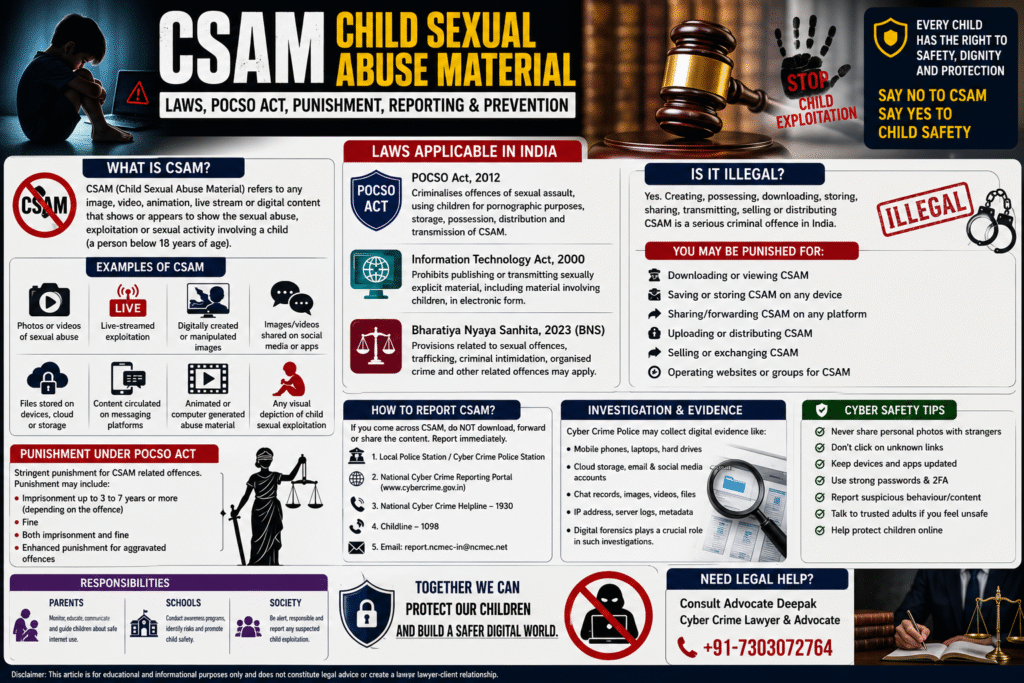
CSAM का पूरा नाम क्या है? CSAM का मतलब है Child Sexual Abuse Material।यह शब्द “Child Pornography” के स्थान पर अधिक उपयुक्त माना जाता है क्योंकि इसमें “पोर्नोग्राफी” जैसी सहमति आधारित अवधारणा नहीं, बल्कि बच्चों के साथ यौन शोषण का स्पष्ट अपराध शामिल होता है। CSAM में वह कोई भी फोटो, वीडियो, ऑडियो, डिजिटल फाइल, एनीमेशन या मॉर्फ की गई (edited) सामग्री शामिल होती है जिसमें 18 वर्ष से कम आयु के बच्चे को यौन गतिविधि में दिखाया गया हो या यौन रूप से प्रदर्शित किया गया हो। भारत में CSAM पर लागू प्रमुख कानून भारत में CSAM से संबंधित अपराधों पर मुख्य रूप से दो कानून लागू होते हैं: Protection of Children from Sexual Offences Act (POCSO Act) Information Technology Act (IT Act, 2000) दोनों कानून साथ-साथ लागू हो सकते हैं। 1️⃣ POCSO Act में CSAM से संबंधित धाराएँ POCSO Act बच्चों को यौन शोषण से सुरक्षा देने वाला विशेष कानून है। CSAM सीधे तौर पर इस अधिनियम के अंतर्गत अपराध है। 🔹 धारा 13 – बच्चे को अश्लील सामग्री के लिए उपयोग करना यदि कोई व्यक्ति: बच्चे को फोटो/वीडियो में यौन गतिविधि में शामिल करे बच्चे की यौन छवि बनाये डिजिटल या प्रिंट माध्यम से प्रसारित करे तो यह धारा 13 के अंतर्गत अपराध है। 🔹 धारा 14 – सज़ा पहली बार अपराध: 5 वर्ष तक की सज़ा + जुर्माना दोबारा अपराध: 7 वर्ष या अधिक + जुर्माना 🔹 धारा 15 – संग्रह (Storage) / डाउनलोड यदि कोई व्यक्ति: CSAM डाउनलोड करता है मोबाइल/लैपटॉप में स्टोर करता है शेयर करने के इरादे से रखता है तो यह भी अपराध है। केवल “देखना” भी यदि जानबूझकर है और रिपोर्ट नहीं किया गया है, तो कानूनी जोखिम उत्पन्न कर सकता है। 2️⃣ IT Act, 2000 में CSAM से संबंधित धाराएँ 🔹 धारा 67B – Child Pornography से संबंधित अपराध यह धारा विशेष रूप से बच्चों की अश्लील सामग्री के लिए है। इसमें शामिल हैं: प्रकाशित करना ट्रांसमिट करना ब्राउज़ करना डाउनलोड करना विज्ञापन देना बच्चों को ऑनलाइन यौन कृत्य में लुभाना सज़ा: पहली बार: 5 वर्ष तक की सज़ा + ₹10 लाख तक जुर्माना दूसरी बार: 7 वर्ष तक की सज़ा + अधिक जुर्माना क्या केवल फॉरवर्ड करना भी अपराध है? हाँ। WhatsApp, Telegram, Instagram या किसी भी सोशल मीडिया प्लेटफॉर्म पर: CSAM फॉरवर्ड करना ग्रुप में शेयर करना लिंक भेजना सभी अपराध की श्रेणी में आते हैं। क्या POCSO Act CSAM पर लागू होता है? ✅ हाँ, बिल्कुल लागू होता है। यदि: बच्चे की यौन छवि बनाई गई है किसी बच्चे को वीडियो में दिखाया गया है मॉर्फिंग करके अश्लील बनाया गया है तो POCSO की धारा 13, 14, 15 लागू हो सकती है।साथ ही IT Act की धारा 67B भी लागू होगी। अर्थात, आरोपी पर दोनों कानूनों के तहत केस दर्ज हो सकता है। CSAM के प्रकार वास्तविक वीडियो/फोटो मॉर्फ की गई तस्वीर AI द्वारा बनाई गई नकली छवि लाइव स्ट्रीमिंग डार्क वेब कंटेंट महत्वपूर्ण कानूनी बिंदु 🔸 सहमति अप्रासंगिक है यदि बच्चा “सहमति” देता भी है, तो भी कानून में वह मान्य नहीं। 🔸 आयु 18 वर्ष से कम 18 वर्ष से कम कोई भी व्यक्ति बच्चा है। 🔸 रिपोर्ट करना अनिवार्य POCSO की धारा 19 के अनुसार: जानकारी होने पर रिपोर्ट करना आवश्यक है। रिपोर्ट न करने पर सज़ा हो सकती है। जांच प्रक्रिया कैसे होती है? FIR दर्ज डिजिटल डिवाइस जब्त फॉरेंसिक जांच IP एड्रेस ट्रैकिंग सोशल मीडिया डेटा रिकवरी Special POCSO Court में ट्रायल होता है। क्या “गलती से” डाउनलोड होने पर भी अपराध है? कानून में “mens rea” (इरादा) महत्वपूर्ण है।लेकिन यदि कोई व्यक्ति: जानबूझकर साइट ब्राउज़ करता है डाउनलोड करता है डिलीट नहीं करता रिपोर्ट नहीं करता तो कानूनी कार्यवाही संभव है। सुप्रीम कोर्ट और हाई कोर्ट के दृष्टिकोण भारतीय न्यायालयों ने माना है: बच्चों की गरिमा सर्वोपरि है CSAM गंभीर अपराध है केवल स्टोरेज भी अपराध हो सकता है CSAM और सोशल मीडिया आज अधिकतर मामले: Telegram WhatsApp Instagram Dark Web से जुड़े होते हैं। सरकार और एजेंसियां AI आधारित मॉनिटरिंग कर रही हैं। बचाव और सावधानियाँ ✅ अज्ञात लिंक पर क्लिक न करें✅ संदिग्ध कंटेंट तुरंत रिपोर्ट करें✅ बच्चों को ऑनलाइन सुरक्षा सिखाएं✅ पैरेंटल कंट्रोल का उपयोग करें✅ VPN या डार्क वेब गतिविधि से बचें सज़ा कितनी गंभीर हो सकती है? CSAM मामलों में: 5 से 7 वर्ष कारावास आजीवन कारावास (गंभीर मामलों में) भारी जुर्माना पासपोर्ट रद्द सरकारी नौकरी समाप्त निष्कर्ष CSAM एक अत्यंत गंभीर और संवेदनशील अपराध है।भारत में: POCSO Act IT Act की धारा 67B दोनों मिलकर बच्चों की सुरक्षा सुनिश्चित करते हैं। डिजिटल युग में जागरूकता और सतर्कता अत्यंत आवश्यक है।कानून सख्त है और दंड भी कठोर। Child Sexual Abuse Material (CSAM) refers to any content that visually depicts a minor engaged in sexual activity or displays a child’s sexual organs for sexual purposes. The term “CSAM” is legally and academically preferred over “child pornography” because children cannot legally consent to sexual activity. Such material represents abuse, exploitation, and criminal conduct. In India, CSAM is treated as a grave criminal offence and is governed primarily by: The Protection of Children from Sexual Offences Act (POCSO Act, 2012) The Information Technology Act (IT Act, 2000) Both statutes often operate together in prosecuting CSAM-related offences. 1. Legal Definition of a Child Under the POCSO Act: A “child” means any person below 18 years of age. Consent of a minor is legally invalid. Even if a minor appears willing, the law treats any sexual depiction or exploitation as an offence. 2. What Constitutes CSAM? CSAM includes: Photographs or videos of a child engaged in sexual activity Images focusing on a child’s sexual organs for sexual purposes Morphed or digitally altered sexual images of minors AI-generated sexual images resembling minors Live-streamed sexual exploitation Storage or distribution of such material The offence exists whether the content is created, possessed, transmitted, or commercially circulated. 3. CSAM under the POCSO Act, 2012 The POCSO Act specifically criminalizes the use of children for pornographic purposes. Section 13 – Use of Child for Pornographic Purposes This section applies where a person: Uses a child in any form of sexual depiction Produces, directs, or participates

What is POCSO Act 2012

What is POCSO Act 2012 ?

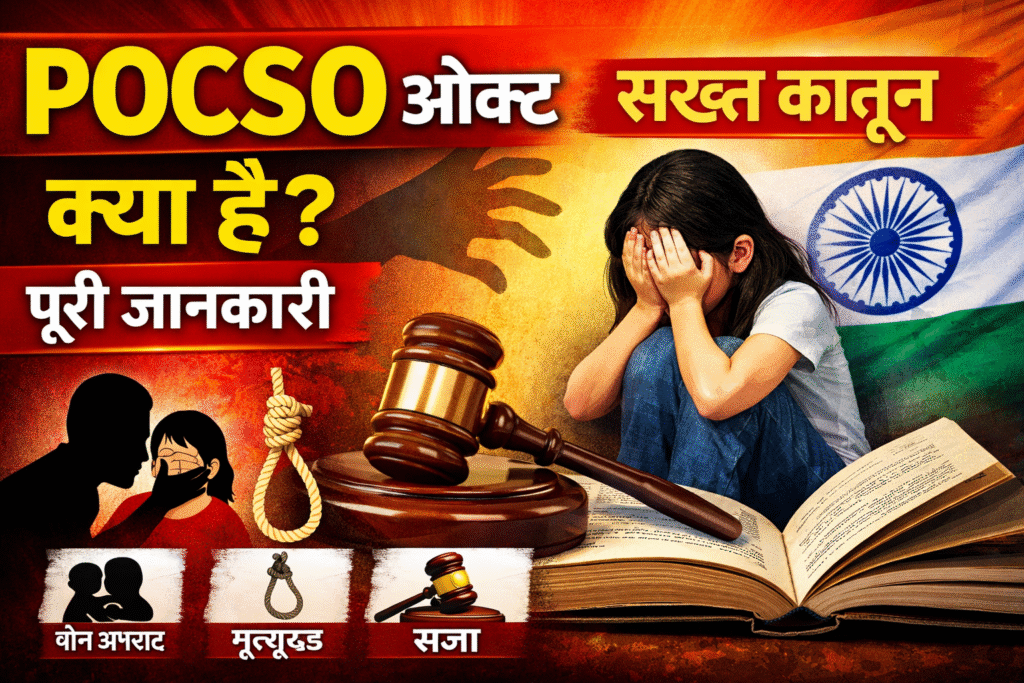
Protection of Children from Sexual Offences Act (POCSO Act, 2012) – Detailed Guide The Protection of Children from Sexual Offences Act, 2012, commonly known as the POCSO Act, is a comprehensive law enacted in India to protect children from sexual abuse, sexual harassment, and pornography. It provides child-friendly mechanisms for reporting, recording evidence, investigation, and speedy trial of offences through Special Courts. This blog explains the meaning, key provisions, punishments, procedures, recent amendments, and legal implications of the POCSO Act in detail. 1. What is the POCSO Act? The POCSO Act, 2012 was enacted to address sexual crimes against children under the age of 18 years. Before this law, there was no specific legislation in India exclusively dealing with child sexual abuse. The Act: Defines various forms of sexual abuse. Prescribes stringent punishments. Ensures child-friendly judicial procedures. Makes reporting of offences mandatory. 2. Who is a “Child” under POCSO? Under Section 2(d) of the Act: A child means any person below 18 years of age. Consent of a minor is not legally valid under this Act. Even if a minor “consents,” the act may still amount to an offence. 3. Types of Offences under POCSO The Act categorizes offences clearly: (A) Penetrative Sexual Assault (Section 3) Includes: Penetration of penis into vagina, mouth, urethra, or anus of a child. Insertion of any object or body part. Manipulation of body parts for penetration. (B) Aggravated Penetrative Sexual Assault (Section 5) This applies when: The offender is a police officer, teacher, relative, or person in authority. The child is below 12 years. The offence causes grievous harm or pregnancy. The assault is committed during communal violence. (C) Sexual Assault (Section 7) Non-penetrative sexual touching with sexual intent. (D) Sexual Harassment (Section 11) Includes: Showing pornography to a child. Making sexually explicit remarks. Stalking or threatening for sexual purposes. (E) Use of Child for Pornography (Section 13) Using a child for sexual depiction in any form of media. 4. Punishments under POCSO Act Punishments are strict and may include: Penetrative Sexual Assault – Minimum 10 years to life imprisonment. Aggravated Penetrative Sexual Assault – 20 years to life or death penalty (after 2019 amendment). Sexual Assault – 3 to 5 years imprisonment. Sexual Harassment – Up to 3 years imprisonment. Child Pornography – 5 to 7 years imprisonment (increased for repeat offenders). The 2019 Amendment introduced harsher penalties, including the death penalty for aggravated penetrative sexual assault on children below 12 years. 5. Mandatory Reporting (Section 19) The Act makes it compulsory to report child sexual offences. Any person (including teachers, doctors, neighbors) who has knowledge of such an offence must report it. Failure to report is punishable. This ensures early detection and protection of children. 6. Child-Friendly Procedure The POCSO Act emphasizes protecting the child from trauma: Statement recorded at child’s residence or a place of choice. Female police officer preferred. No aggressive cross-examination. Identity of child must not be disclosed. Special Courts for speedy trial. The trial should ideally be completed within one year. 7. Special Courts under POCSO The Act provides for establishment of Special POCSO Courts to: Conduct in-camera trials. Ensure speedy disposal. Prevent secondary victimization. These courts prioritize child safety and confidentiality. 8. Presumption of Guilt (Reverse Burden) Unlike regular criminal cases, POCSO contains a reverse burden of proof. If certain foundational facts are established, the court may presume the accused committed the offence. The accused must prove innocence. This strengthens child protection but also raises concerns regarding misuse. 9. Relationship with Other Laws POCSO works along with: Indian Penal Code (IPC) Information Technology Act (in cases involving online abuse) Juvenile Justice Act If there is any inconsistency, POCSO provisions generally prevail for child sexual offences. 10. Important Amendments (2019) Key changes include: Death penalty for aggravated penetrative sexual assault. Increased minimum punishments. Faster investigation timelines. Stricter provisions for child pornography. 11. False Complaints under POCSO The Act penalizes false complaints made with malicious intent. However: A child cannot be punished for false reporting. Courts carefully examine evidence before conviction. False implication concerns are often raised in teenage consensual relationship cases. 12. Key Legal Challenges Some issues seen in practice: Misuse in consensual adolescent relationships. Delay in forensic reports. Social stigma affecting reporting. Lack of trained investigators in rural areas. Despite challenges, the Act remains a powerful child-protection mechanism. 13. Landmark Judicial Observations Courts in India have clarified: Even skin-to-skin contact with sexual intent can attract POCSO. Consent of a minor is irrelevant. The victim’s testimony alone can be sufficient for conviction if credible. 14. How to File a Complaint under POCSO? If a child is sexually abused: Dial 112 (Emergency). Contact local police station. Approach Child Welfare Committee. File FIR under relevant POCSO sections. Seek medical examination immediately. Identity of the child is legally protected. 15. Conclusion The Protection of Children from Sexual Offences Act, 2012 is one of India’s strongest child-protection laws. It: Defines child sexual offences clearly. Prescribes strict punishment. Ensures child-friendly judicial processes. Mandates reporting of offences. While implementation challenges remain, POCSO plays a crucial role in safeguarding children and ensuring justice against sexual exploitation. POCSO Act, 2012 भारत में बच्चों को यौन शोषण, उत्पीड़न और अश्लील सामग्री से बचाने के लिए बनाया गया एक विशेष कानून है। यह कानून 18 वर्ष से कम आयु के बच्चों को पूर्ण कानूनी संरक्षण प्रदान करता है और ऐसे मामलों में कठोर सज़ा का प्रावधान करता है। 1. POCSO Act क्या है? Protection of Children from Sexual Offences Act, 2012 एक व्यापक कानून है, जिसका उद्देश्य बच्चों के विरुद्ध होने वाले यौन अपराधों को रोकना और पीड़ित बच्चों को न्याय दिलाना है। इस कानून में: यौन अपराधों की स्पष्ट परिभाषा दी गई है कठोर सज़ा का प्रावधान है विशेष POCSO अदालतों की व्यवस्था है बच्चे के अनुकूल (Child-Friendly) प्रक्रिया अपनाई जाती है 2. “बच्चा” किसे माना जाता है? इस अधिनियम के अनुसार: 18 वर्ष से कम आयु का हर व्यक्ति “बच्चा” है। यदि कोई नाबालिग सहमति भी दे, तो भी कानून की दृष्टि में वह सहमति

Uncategorized

Divorce Lawyer in Surajpur Court | Greater Noida

If you are facing serious marital disputes and searching for a divorce lawyer in Surajpur Court, it is important to understand the legal procedure before filing any case. The Family Court at Surajpur Court handles a large number of matrimonial matters every year. Hiring an experienced divorce lawyer in Surajpur Court can help you protect your legal rights, financial interests, and child custody claims. This detailed guide explains the divorce process, legal grounds, documentation, maintenance, and custody laws to help you make informed decisions. Why You Need a Divorce Lawyer in Surajpur Court A professional divorce lawyer in Surajpur Court provides proper legal guidance at every stage of the case. Divorce is not just emotional; it involves technical legal drafting, evidence submission, and courtroom representation. A skilled divorce lawyer in Surajpur Court can help you: Draft and file divorce petitions correctly Respond to legal notices Represent you during mediation Handle contested hearings Protect property and financial rights Secure maintenance and alimony Ensure proper child custody arrangements Choosing the right divorce lawyer in Surajpur Court reduces delays and strengthens your legal position. Types of Divorce Cases in Surajpur Court An experienced divorce lawyer in Surajpur Court handles different types of divorce matters: 1. Mutual Consent Divorce When both husband and wife agree to separate peacefully, a divorce lawyer in Surajpur Court files a joint petition. This is usually the fastest method and may take around 6 to 12 months. 2. Contested Divorce If one spouse does not agree to the divorce, a divorce lawyer in Surajpur Court files a contested petition based on grounds such as: Cruelty Desertion Adultery Domestic violence Mental harassment 3. Divorce Under Personal Laws A knowledgeable divorce lawyer in Surajpur Court handles cases under: Hindu Marriage Act Muslim Personal Law Special Marriage Act Christian Marriage Act Each law has different procedures, and a professional divorce lawyer in Surajpur Court ensures proper compliance. Divorce Procedure in Surajpur Court The general process followed by a divorce lawyer in Surajpur Court includes: Initial legal consultation Drafting and filing of divorce petition Court notice to the opposite party Mediation or counseling sessions Evidence submission Cross-examination Final arguments and judgment An experienced divorce lawyer in Surajpur Court ensures that all documents and legal grounds are properly presented before the court. Documents Required for Divorce Case To proceed through a divorce lawyer in Surajpur Court, you may need: Marriage certificate Address proof Identity proof Wedding photographs Income proof Evidence supporting allegations (if contested) Child details (if applicable) Submitting proper documents helps your divorce lawyer in Surajpur Court prepare a strong and well-supported petition. Child Custody and Maintenance Child custody and financial support are crucial parts of any divorce case. A professional divorce lawyer in Surajpur Court assists in: Filing child custody applications Claiming interim maintenance Negotiating permanent alimony Securing visitation rights The court always considers the welfare of the child. A skilled divorce lawyer in Surajpur Court presents arguments that protect both parental and financial rights. How Long Does Divorce Take in Surajpur Court? Mutual Consent Divorce: 6 to 12 months Contested Divorce: 1 to 3 years depending on complexity Proper strategy by a divorce lawyer in Surajpur Court can help avoid unnecessary adjournments and delays. Qualities of the Best Divorce Lawyer in Surajpur Court When selecting a divorce lawyer in Surajpur Court, consider: Experience in family law cases Strong courtroom representation Clear communication Confidential case handling Transparent legal fees A dedicated divorce lawyer in Surajpur Court focuses on fair settlements and long-term legal security. Divorce can be emotionally and financially stressful, but the right legal guidance makes the process manageable. If you are planning to file or respond to a divorce petition, consult a professional divorce lawyer in Surajpur Court to understand your rights and legal options clearly.

Property Dispute Lawyer in Surajpur Court, Property Dispute Lawyer/Advocate in Surajpur Court

Property Dispute Lawyer/Advocate in Surajpur Court

When it comes to resolving land, house, or ancestral property conflicts, hiring an experienced Property Dispute Lawyer in Surajpur Court becomes extremely important. Property matters often involve emotional, financial, and legal complications. A professional legal approach ensures your rights are protected and the dispute is resolved efficiently under Indian law. Surajpur Court handles various civil and property-related cases for residents of Greater Noida and nearby areas. Understanding the role of a Property Dispute Lawyer in Surajpur Court can help you take the right legal steps at the right time. What is a Property Dispute? A property dispute generally arises when two or more parties claim ownership or rights over a property. These disputes may relate to: Ancestral property division Partition suits among family members Illegal possession or encroachment Builder-buyer disputes Sale deed cancellation Agreement to sell disputes Will and inheritance conflicts In such cases, a Property Dispute Lawyer in Surajpur Court represents clients before the civil court and ensures proper legal documentation and evidence presentation. Types of Property Cases Handled in Surajpur Court A skilled Property Dispute Lawyer in Surajpur Court deals with multiple categories of property litigation, including: 1. Partition Suit When family members cannot mutually divide inherited property, a partition suit is filed in court. 2. Title Dispute If ownership documents are unclear or disputed, legal action is required to establish rightful ownership. 3. Possession and Eviction Matters Illegal occupation or tenant-related conflicts often require court intervention. 4. Injunction Cases If someone attempts to sell or transfer disputed property illegally, an injunction order can stop the transaction. 5. Specific Performance Cases If a property agreement is violated, the court can enforce the contract legally. A Property Dispute Lawyer in Surajpur Court ensures proper drafting of plaint, written statement, affidavits, and legal notices as per civil procedure. Why You Need a Property Dispute Lawyer in Surajpur Court Property law in India is governed by multiple legal provisions such as: Transfer of Property Act, 1882 Indian Succession Act Hindu Succession Act Civil Procedure Code Without proper legal knowledge, property disputes can take years to resolve. A professional Property Dispute Lawyer in Surajpur Court helps in: Verifying property documents Checking title and ownership history Filing civil suits correctly Representing clients during hearings Seeking stay orders and injunctions Negotiating settlements when possible Legal strategy plays a key role in winning property litigation. Common Causes of Property Disputes in Greater Noida Property disputes frequently arise due to: Lack of clear documentation Oral family settlements Fraudulent sale transactions Multiple sale deeds Power of Attorney misuse Encroachment on land A knowledgeable Property Dispute Lawyer in Surajpur Court investigates documents such as sale deeds, registry papers, mutation records, and revenue entries before initiating legal action. Legal Process in Property Dispute Cases When you hire a Property Dispute Lawyer in Surajpur Court, the process generally involves: Legal consultation and document review Issuance of legal notice Filing of civil suit Court hearings and evidence submission Cross-examination Final arguments and judgment The court may also refer the matter for mediation to resolve the dispute amicably. Important Documents Required For filing a property case, the following documents are usually required: Sale deed / Registry copy Property tax receipts Mutation certificate Encumbrance certificate Identity proof of parties Previous agreements or family settlement documents An experienced Property Dispute Lawyer in Surajpur Court ensures all documents are legally valid and admissible in court. How to Choose the Right Property Dispute Lawyer in Surajpur Court While selecting legal representation, consider: Experience in civil litigation Knowledge of local court procedures Drafting skills Courtroom representation ability Transparent legal advice Choosing a competent Property Dispute Lawyer in Surajpur Court increases the chances of favorable judgment and protects your property rights. Property disputes can become complicated and time-consuming if not handled properly. Timely legal action and professional guidance are essential. Whether it is ancestral division, title conflict, or possession issue, consulting a qualified Property Dispute Lawyer in Surajpur Court ensures your rights are safeguarded under Indian law.

Civil Advocate in Surajpur Court Greater Noida

Civil Advocate in Surajpur Court Greater Noida

About Surajpur Court Greater Noida District Court Surajpur handles various civil and criminal matters for residents of Greater Noida and nearby areas. The court deals with: Property disputes Recovery suits Partition suits Injunction matters Contract disputes Civil appeals Land acquisition cases Hiring a Civil Advocate in Surajpur Court Greater Noida ensures proper representation before the appropriate civil judge. What Does a Civil Advocate in Surajpur Court Greater Noida Handle? A Civil Advocate in Surajpur Court Greater Noida typically handles: 1. Property Disputes Illegal possession cases Title disputes Builder-buyer disputes Land ownership conflicts 2. Recovery Suits Money recovery cases Cheque bounce recovery (civil side) Loan disputes 3. Injunction Matters Stay orders Status quo orders Temporary injunction applications 4. Partition & Family Property Cases Ancestral property division Co-owner disputes 5. Agreement & Contract Disputes Breach of contract Specific performance suits Why Hire a Civil Advocate in Surajpur Court Greater Noida? Hiring a Civil Advocate in Surajpur Court Greater Noida is important because: Proper drafting of plaint and written statement Filing of interim applications Court representation during hearings Evidence presentation Cross-examination Final arguments Civil procedure requires technical drafting and knowledge of procedural law. Errors in pleadings can delay your case. Civil Case Filing Process in Surajpur Court Case consultation and document review Drafting of plaint Court fee calculation Filing before appropriate civil court Issuance of summons Written statement by opposite party Evidence stage Final arguments and judgment A Civil Advocate in Surajpur Court Greater Noida guides clients through each stage. How to Choose the Right Civil Advocate in Surajpur Court Greater Noida When selecting a Civil Advocate in Surajpur Court Greater Noida, consider: Experience in civil litigation Knowledge of property laws Courtroom experience Drafting skills Case strategy approach Transparent consultation Always discuss documents and expected timelines before proceeding. Common Civil Disputes in Greater Noida Greater Noida being a fast-developing region sees frequent cases related to: Builder possession delay Plot and flat disputes Land demarcation conflicts Sale agreement disputes Commercial lease conflicts A Civil Advocate in Surajpur Court Greater Noida regularly handles such regional disputes. Importance of Timely Legal Action Civil cases are subject to limitation periods. Delay may weaken your legal rights. Immediate consultation with a Civil Advocate in Surajpur Court Greater Noida helps: Preserve legal claims File stay applications Prevent illegal possession Protect financial interests Benefits of Professional Civil Representation ✔ Proper case strategy✔ Strong drafting✔ Court compliance✔ Legal documentation accuracy✔ Efficient hearing management If you are facing a property dispute, recovery matter, contract issue, or injunction requirement, consulting a Civil Advocate in Surajpur Court Greater Noida is essential. Civil litigation involves detailed procedures and technical drafting, and professional legal representation ensures your rights are effectively protected before the court. Disclaimer This content is provided for informational purposes only. It does not constitute legal advice and is not intended as a marketing advertisement or solicitation. For advice specific to your case, consult a qualified legal professional.

Scroll to Top