
Protection of Children from Sexual Offences Act (POCSO Act, 2012) – Detailed Guide
The Protection of Children from Sexual Offences Act, 2012, commonly known as the POCSO Act, is a comprehensive law enacted in India to protect children from sexual abuse, sexual harassment, and pornography. It provides child-friendly mechanisms for reporting, recording evidence, investigation, and speedy trial of offences through Special Courts.
This blog explains the meaning, key provisions, punishments, procedures, recent amendments, and legal implications of the POCSO Act in detail.
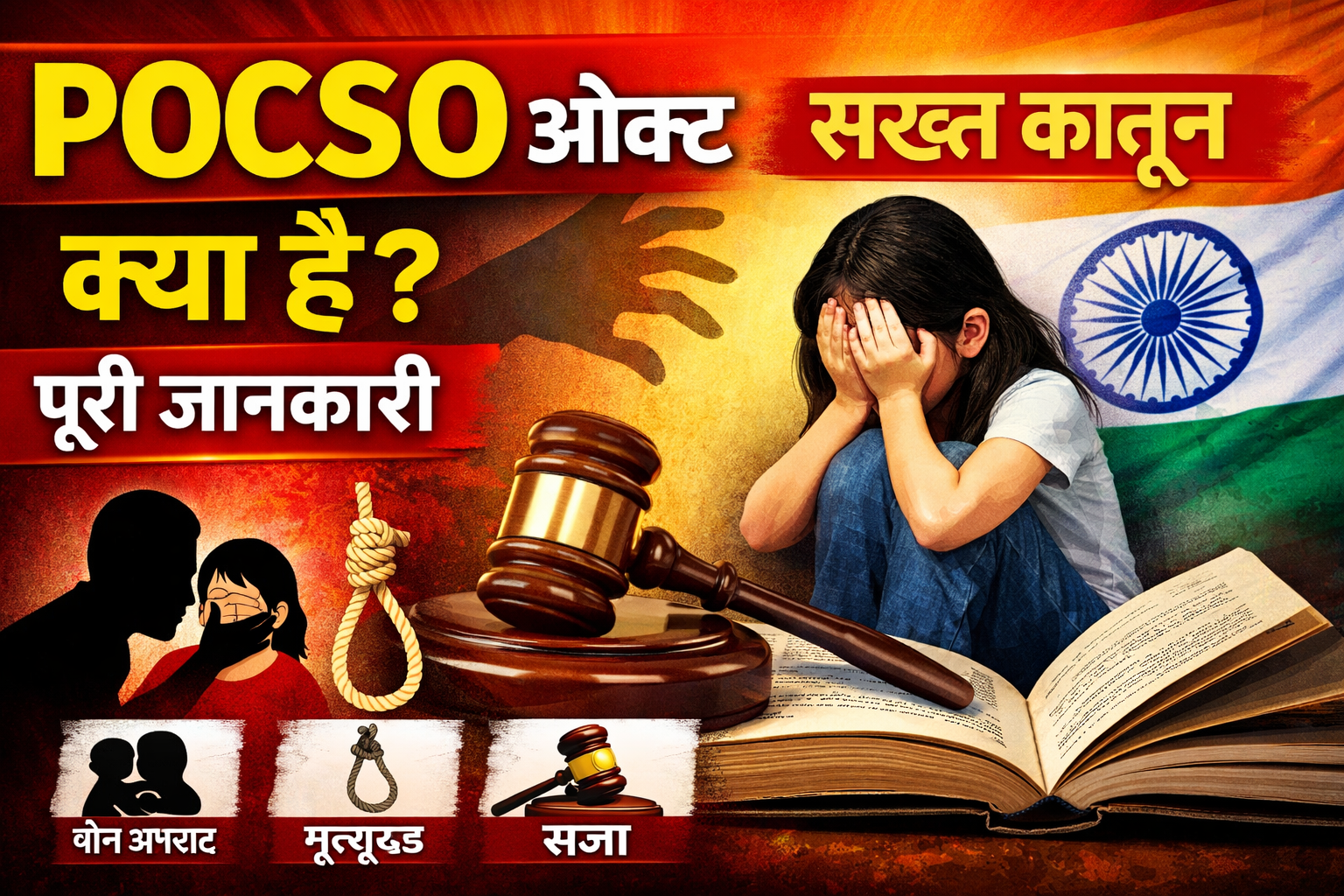
1. What is the POCSO Act?
The POCSO Act, 2012 was enacted to address sexual crimes against children under the age of 18 years. Before this law, there was no specific legislation in India exclusively dealing with child sexual abuse.
The Act:
-
Defines various forms of sexual abuse.
-
Prescribes stringent punishments.
-
Ensures child-friendly judicial procedures.
-
Makes reporting of offences mandatory.
2. Who is a “Child” under POCSO?
Under Section 2(d) of the Act:
A child means any person below 18 years of age.
Consent of a minor is not legally valid under this Act. Even if a minor “consents,” the act may still amount to an offence.
3. Types of Offences under POCSO
The Act categorizes offences clearly:
(A) Penetrative Sexual Assault (Section 3)
Includes:
-
Penetration of penis into vagina, mouth, urethra, or anus of a child.
-
Insertion of any object or body part.
-
Manipulation of body parts for penetration.
(B) Aggravated Penetrative Sexual Assault (Section 5)
This applies when:
-
The offender is a police officer, teacher, relative, or person in authority.
-
The child is below 12 years.
-
The offence causes grievous harm or pregnancy.
-
The assault is committed during communal violence.
(C) Sexual Assault (Section 7)
Non-penetrative sexual touching with sexual intent.
(D) Sexual Harassment (Section 11)
Includes:
-
Showing pornography to a child.
-
Making sexually explicit remarks.
-
Stalking or threatening for sexual purposes.
(E) Use of Child for Pornography (Section 13)
Using a child for sexual depiction in any form of media.
4. Punishments under POCSO Act
Punishments are strict and may include:
-
Penetrative Sexual Assault – Minimum 10 years to life imprisonment.
-
Aggravated Penetrative Sexual Assault – 20 years to life or death penalty (after 2019 amendment).
-
Sexual Assault – 3 to 5 years imprisonment.
-
Sexual Harassment – Up to 3 years imprisonment.
-
Child Pornography – 5 to 7 years imprisonment (increased for repeat offenders).
The 2019 Amendment introduced harsher penalties, including the death penalty for aggravated penetrative sexual assault on children below 12 years.
5. Mandatory Reporting (Section 19)
The Act makes it compulsory to report child sexual offences.
-
Any person (including teachers, doctors, neighbors) who has knowledge of such an offence must report it.
-
Failure to report is punishable.
This ensures early detection and protection of children.
6. Child-Friendly Procedure
The POCSO Act emphasizes protecting the child from trauma:
-
Statement recorded at child’s residence or a place of choice.
-
Female police officer preferred.
-
No aggressive cross-examination.
-
Identity of child must not be disclosed.
-
Special Courts for speedy trial.
The trial should ideally be completed within one year.
7. Special Courts under POCSO
The Act provides for establishment of Special POCSO Courts to:
-
Conduct in-camera trials.
-
Ensure speedy disposal.
-
Prevent secondary victimization.
These courts prioritize child safety and confidentiality.
8. Presumption of Guilt (Reverse Burden)
Unlike regular criminal cases, POCSO contains a reverse burden of proof.
-
If certain foundational facts are established, the court may presume the accused committed the offence.
-
The accused must prove innocence.
This strengthens child protection but also raises concerns regarding misuse.
9. Relationship with Other Laws
POCSO works along with:
-
Indian Penal Code (IPC)
-
Information Technology Act (in cases involving online abuse)
-
Juvenile Justice Act
If there is any inconsistency, POCSO provisions generally prevail for child sexual offences.
10. Important Amendments (2019)
Key changes include:
-
Death penalty for aggravated penetrative sexual assault.
-
Increased minimum punishments.
-
Faster investigation timelines.
-
Stricter provisions for child pornography.
11. False Complaints under POCSO
The Act penalizes false complaints made with malicious intent. However:
-
A child cannot be punished for false reporting.
-
Courts carefully examine evidence before conviction.
False implication concerns are often raised in teenage consensual relationship cases.
12. Key Legal Challenges
Some issues seen in practice:
-
Misuse in consensual adolescent relationships.
-
Delay in forensic reports.
-
Social stigma affecting reporting.
-
Lack of trained investigators in rural areas.
Despite challenges, the Act remains a powerful child-protection mechanism.
13. Landmark Judicial Observations
Courts in India have clarified:
-
Even skin-to-skin contact with sexual intent can attract POCSO.
-
Consent of a minor is irrelevant.
-
The victim’s testimony alone can be sufficient for conviction if credible.
14. How to File a Complaint under POCSO?
If a child is sexually abused:
-
Dial 112 (Emergency).
-
Contact local police station.
-
Approach Child Welfare Committee.
-
File FIR under relevant POCSO sections.
-
Seek medical examination immediately.
Identity of the child is legally protected.
15. Conclusion
The Protection of Children from Sexual Offences Act, 2012 is one of India’s strongest child-protection laws. It:
-
Defines child sexual offences clearly.
-
Prescribes strict punishment.
-
Ensures child-friendly judicial processes.
-
Mandates reporting of offences.
While implementation challenges remain, POCSO plays a crucial role in safeguarding children and ensuring justice against sexual exploitation.
POCSO Act, 2012 भारत में बच्चों को यौन शोषण, उत्पीड़न और अश्लील सामग्री से बचाने के लिए बनाया गया एक विशेष कानून है। यह कानून 18 वर्ष से कम आयु के बच्चों को पूर्ण कानूनी संरक्षण प्रदान करता है और ऐसे मामलों में कठोर सज़ा का प्रावधान करता है।
1. POCSO Act क्या है?
Protection of Children from Sexual Offences Act, 2012 एक व्यापक कानून है, जिसका उद्देश्य बच्चों के विरुद्ध होने वाले यौन अपराधों को रोकना और पीड़ित बच्चों को न्याय दिलाना है।
इस कानून में:
-
यौन अपराधों की स्पष्ट परिभाषा दी गई है
-
कठोर सज़ा का प्रावधान है
-
विशेष POCSO अदालतों की व्यवस्था है
-
बच्चे के अनुकूल (Child-Friendly) प्रक्रिया अपनाई जाती है
2. “बच्चा” किसे माना जाता है?
इस अधिनियम के अनुसार:
18 वर्ष से कम आयु का हर व्यक्ति “बच्चा” है।
यदि कोई नाबालिग सहमति भी दे, तो भी कानून की दृष्टि में वह सहमति मान्य नहीं मानी जाएगी।
3. POCSO Act के अंतर्गत अपराधों के प्रकार
(A) लैंगिक हमला (Penetrative Sexual Assault)
-
बच्चे के शरीर के किसी भी भाग में यौन उद्देश्य से प्रवेश करना
-
किसी वस्तु का प्रयोग करना
(B) गंभीर लैंगिक हमला (Aggravated Penetrative Sexual Assault)
जब अपराधी:
-
शिक्षक, पुलिसकर्मी, रिश्तेदार या भरोसेमंद व्यक्ति हो
-
बच्चा 12 वर्ष से कम आयु का हो
-
अपराध से गंभीर चोट या गर्भधारण हो
(C) यौन उत्पीड़न (Sexual Assault)
-
बिना प्रवेश के अनुचित स्पर्श
(D) यौन उत्पीड़न/छेड़छाड़ (Sexual Harassment)
-
अश्लील टिप्पणी
-
अश्लील सामग्री दिखाना
-
पीछा करना या धमकी देना
(E) बाल अश्लीलता (Child Pornography)
-
बच्चे को अश्लील सामग्री बनाने या प्रसारित करने में शामिल करना
4. सज़ा का प्रावधान
POCSO Act के अंतर्गत सज़ाएँ बहुत कठोर हैं:
-
लैंगिक हमला – न्यूनतम 10 वर्ष से आजीवन कारावास
-
गंभीर लैंगिक हमला – 20 वर्ष से आजीवन कारावास या मृत्युदंड
-
यौन उत्पीड़न – 3 से 5 वर्ष तक की सज़ा
-
यौन उत्पीड़न/छेड़छाड़ – 3 वर्ष तक की सज़ा
2019 संशोधन के बाद सज़ाओं को और अधिक कड़ा किया गया है।
5. रिपोर्ट करना अनिवार्य
इस कानून के अनुसार:
-
यदि किसी को बच्चे के साथ यौन अपराध की जानकारी है, तो उसे पुलिस को सूचना देना अनिवार्य है।
-
रिपोर्ट न करने पर दंड हो सकता है।
6. बच्चे के अनुकूल प्रक्रिया
POCSO Act में यह सुनिश्चित किया गया है कि बच्चा मानसिक रूप से परेशान न हो:
-
बयान घर या सुरक्षित स्थान पर दर्ज किया जाता है
-
महिला पुलिस अधिकारी द्वारा बयान लेने की प्राथमिकता
-
पहचान गोपनीय रखी जाती है
-
इन-कैमरा (बंद कमरे) में सुनवाई
7. विशेष POCSO अदालतें
तेज़ सुनवाई और न्याय के लिए विशेष अदालतें बनाई जाती हैं, जो ऐसे मामलों को प्राथमिकता देती हैं।
8. अन्य कानूनों से संबंध
POCSO Act अन्य कानूनों के साथ मिलकर काम करता है, जैसे:
-
Indian Penal Code
-
Information Technology Act
यदि कोई अपराध ऑनलाइन माध्यम से जुड़ा हो, तो IT Act भी लागू हो सकता है।
9. शिकायत कैसे दर्ज करें?
यदि किसी बच्चे के साथ यौन अपराध हुआ हो:
-
112 पर कॉल करें
-
नजदीकी पुलिस स्टेशन में FIR दर्ज कराएं
-
मेडिकल जांच कराएं
-
चाइल्ड वेलफेयर कमेटी से संपर्क करें
बच्चे की पहचान कानूनन गोपनीय रखी जाती है।
10. निष्कर्ष
POCSO Act, 2012 बच्चों की सुरक्षा के लिए एक सशक्त और कठोर कानून है। इसका उद्देश्य है:
-
बच्चों को यौन शोषण से बचाना
-
अपराधियों को सख्त सज़ा देना
-
पीड़ित को सुरक्षित और संवेदनशील न्याय प्रक्रिया देना
समाज और परिवार की जिम्मेदारी है कि बच्चों की सुरक्षा सुनिश्चित करें और किसी भी संदिग्ध गतिविधि की तुरंत सूचना दें।
⚖️ अस्वीकरण (Disclaimer)
यह लेख केवल सामान्य कानूनी जानकारी प्रदान करने के उद्देश्य से लिखा गया है। यह किसी भी प्रकार की कानूनी सलाह (Legal Advice) नहीं है। प्रत्येक मामला अपने तथ्यों और परिस्थितियों के आधार पर अलग होता है। किसी विशेष मामले में उचित कानूनी सलाह के लिए योग्य अधिवक्ता से परामर्श अवश्य लें।
इस लेख का उद्देश्य केवल जागरूकता फैलाना है।